Thursday, November 29, 2007

Tetanus Antitoxin

The other day at work I had a revelation. Either I had never sold tetanus antitoxin or I had never really put two and two together until taking this course. The idea that we actually become ill, not from the bacteria itself, but from the toxins they produce, has stuck in my mind ever since the famous “egg salad sandwich” class. So, when I dispensed tetanus antitoxin for a horse that had been castrated the previous day, it got me thinking….

Tetanus is a disease caused by the bacteria Clostridium tetani, which can be found in hospitals, dust, the feces and intestinal tract of horses and humans, and consequently found in the soil. It can contaminate many kinds of wounds, including the umbilici of foals and surgical incisions (Ah ha!).

An often fatal disease, tetanus is one of those illnesses that horses are most susceptible to and should be vaccinated for annually. The vaccine, called tetanus toxoid, is very safe and induces long-lasting immunity. Vaccination is the only proven method of prevention against diseases like tetanus, where there is no known cure and where treatment is usually unsuccessful. Side effects from the tetanus toxoid vaccine are very rare and should be outweighed by the benefits of vaccinating.

Clostridium tetani enters the body via a variety of different types of wounds, surgical incisions, and natural means including foal umbilici and retained placenta. After entrance, the bacteria emit powerful toxins that affect the central nervous system by blocking neurotransmission, and thus inducing involuntary muscle contractions and spasms. The first symptoms to occur include paralysis of the jaw muscles and the muscles around the wound, body spasms or convulsions, stiff legged movement and pricked ears, progressing on to muscles so rigid that the horse often falls and is not able to get up again. Death results from dehydration and starvation due to paralysis and/or from respiratory muscle paralysis. On average, the incubation period for tetanus is 8 days. However, bacterial spores can remain dormant in muscle tissue until trauma produces the much desired low oxygen environment.

If a horse has never been vaccinated against tetanus and there is a possibility for Clostridium tetani to enter the body (like the horse that had just been castrated), tetanus antitoxin should be administered along with the tetanus toxoid to prevent infection at a later date. The antitoxin is an antibody capable of neutralizing a toxin (Clostridium tetani toxin). It induces short-lived (about 2-3 weeks) but immediate protection against tetanus. Made from the blood of horses that have been repeatedly injected with large amounts of Clostridium tetani toxin, the antitoxin is considered a treatment, not a vaccine as it does not provide any long term protection. Therefore, when an unvaccinated animal sustains a wound, the antitoxin should be administered as protection for the first few weeks while the tetanus toxoid takes time to stimulate long term immunity (approximately 3-4 weeks).

Vaccine protocols should also be followed for humans, especially when working closely with horses. It is recommended that the human tetanus vaccine be updated every 10 years. However, even with antitoxin, there is still no 100% guarantee and proper, preventive care should still be taken when treating open wounds, both human and horse.

REFERENCES:

http://www.oregonequine.com/imdetails.htm

http://www.noah.co.uk/issues/briefingdoc/20-equinevaccination.htm

http://www.omafra.gov.on.ca/english/livestock/horses/facts/info_tetanus.htm

www.pfizeranimalhealth.com.au

Wednesday, November 28, 2007

Gene Therapy -- A Possible Cure for Blindness


Every now and then I come across an article or hear a story on the news that makes me take a step back and realize how incredibly far the science of genetics has come. As of May 1, 2007, testing for a gene therapy treatment has begun that may lead to a cure for a type of blindness in humans called Leber's congenital amaurosis (LCA). LCA is described as “a type of inherited childhood blindness caused by a single abnormal gene [which] prevents the retina from detecting light properly, resulting in progressive deterioration and severely impaired eyesight.” Clinical testing in humans comes as a result of the amazing success of the treatment in dogs born with LCA. After treatment the dogs recovered enough sight to successfully navigate an obstacle course!

So, how does gene therapy work? As we all know by now, proteins and enzymes are the major players in every biological process occurring in our body. Genes are the code for creating these proteins, and when a certain gene is mutated or lacking, a genetic disorder can result. Specifically, LCA results from mutations in the RPE65 gene which codes for a protein needed by retinal cells in order to respond to light.

Gene therapy relies on the tricky nature of the virus. Viruses are capable of inserting their genome into the genome of the host which they are infecting. Scientists are able to modify the virus, (or “vector” when used in this capacity) removing harmful disease causing genes and replacing them with therapeutic genes. The virus can then be introduced to target cells where they infect and insert the desired gene. In the case of LCA, an adeno-associated virus is modified to carry the RPE65 gene. The vector is then injected through small incisions in the eye which allow access to the surface of the retina. Here the retinal cells can incorporate the viral genome into their own and begin producing the lacking protein.

The success of this treatment in humans is still unknown as trials are still in the works, but based on the success of the treatment in dogs, I think it is safe to get a little excited about the prospects of this therapy!


Sources:


Image courtesy of :


Tuesday, November 27, 2007

H5N1: Avian Bird Flu, are we prepared for a pandemic?


A few weeks ago on the BBC they showed a segment on a recent out break of the H5N1 strain of Avian Bird Flu, which had become recently prevalent in turkeys in the UK. It was noticed due to swelling of the turkeys heads' and a blue discoloration on the neck. A 3km danger zone and 10km surveillance zone was set up. The farmers and Food Standard Agency are not otherwise worried about this outbreak because it is not believed to be easily transferred to humans, unless one comes into close contact with the turkey itself. They are taking precaution by keeping the believed unaffected turkeys inside and kept a close watch on for symptoms. However, they may be over looking fecal matter and saliva of the turkeys, which can get into irrigation systems and fertilizers. Also, the virus is easily and quickly transferred from human to human. So, as soon as one person becomes infected it could mean the beginning of a pandemic. The situation could be prevented if it was immediately addressed and the person was put in isolation. The Food Standard Agency does not seem to be too concerned and are just telling people to “cook their meat well.” This could be in an attempt to protect the turkey farmers from plummeting sales as Christmas season approaches.

While Food Standard Agency is saying this Avian Flu outbreak is nothing to be worried about Britain is doubling their antiviral medicine in preparation for a pandemic, stalk piling their resources of Tamiflu. Tamiflu is a “key defence against pandemic flu in the weeks it would to take to develop a vaccine against the culprit virus (BBC Health, Mr. Johnson).” It is an antiviral drug which reduces the length and intensity of the illness. Some scientists believe that the possible flu pandemic could be caused by the bird flu, which has been prevalent in the past months in some regions of the UK. If only a few people do contract the virus it can spread quickly and also mutates at a very high rate, making it difficult to trigger the “culprit virus.” Unfortunately our current influenza vaccination does not protect against the H5N1 stain. It protects against H1N1, H3N2 and B influenza strains. However, each year the shot immunizes against different strains, which could give you a little extra boost in immunity against other strains which may become present. This is a bit of a shot in the dark but may help out when life threatening strains are introduced into the human population. A vaccination for H5N1 is being tested at the moment but is not ready to be available to the public. It is a scary to think that a flu pandemic could occur but thankfully there has not been many human cases thus far. Giving the science community time to develop vaccinations and other modes of protection and cures encase this pandemic does reach us. I think the UK has the right idea in stock piling their resources even if they are not sure the virus will affect their communities.

Sources:
http://pediatrics.about.com/od/weeklyquestion/a/05_bird_flu.htm
http://news.bbc.co.uk/2/hi/science/nature/7091701.stm
http://news.bbc.co.uk/2/hi/health/7107097.stm
http://www.abc.net.au/sa/stories/m832294.jpg

Is there an MRSA epidemic on our hands?

http://www.cdc.gov/ncidod/dhqp/ar_mrsa_ca_posters.html

Honestly no pun intended; however, a very interesting segment of 60 Minutes on CBS that was recently broadcasted: “Controlling the Superbug” sure caught my attention. I also believe that the heart of this discussion further emphasizes our previous in class epidemiology assignment. Only now the focus is not only on methicillin-resistant Staphylococcus aureus (MRSA) infections that occur more exclusively in hospital and healthcare settings, nursing homes and dialysis centers, or in those individuals that are elderly or immunocompromised. Becoming more prevalent are acquired infections in otherwise healthy people and young students, including athletes, which are typically signified as the epitome of health. These infections are known as community-associated MRSA (CA-MRSA) as defined by the Centers for Disease Control and Prevention (CDC) and are cause for great concern. 60 Minutes correspondent Lesley Stahl reported on an increasing number of outbreaks. One such case, “Mt. Lebanon High School in Pennsylvania has been hit hard: 13 members of its football team, the Blue Devils, came down with MRSA infections this year” (Stahl 1). Further adding to the problem, “parents are understandably frantic and want to know what causes it, and how to protect against it. Problem is: there aren't many answers” (Stahl 1). Top that off with “Everyone agrees that this is an epidemic. And not only is it an epidemic. But, it's an epidemic of our times. It's here in huge numbers," says Dr. Robert Daum, an infectious disease pediatrician at the University of Chicago Medical Center (Stahl 1), and voila: a recipe for panic stricken people who live in a society driven by fear and misinformation or worse, lack of information, reacting to the emergence of a serious problem.

Behold, the proclamation of a witch-hunt or modern day lynching on “the cockroach of bacteria” (AP 1). So now we have a mob gathering their weapons with a “shoot first and ask questions later” mentality. Case in point: "I understand that one parent wanted you to put all the kids on an antibiotic, Bactrim, as a preventative," (Stahl 3). Perfect. Why don’t we add some more selective pressure and further test Darwin’s theories? Is this not part of the reason that our society is in such a predicament in the first place? How about what will happen when the mob runs out of “silver bullets”? One of the most serious threats to public health on a global scale is the conjugation of drug-resistant pathogens. New strains known as meticillin-resistant (formerly methicillin-resistant) MRSA have developed resistance to the antibiotic used as the last line of defense, giving way to new strains of vancomycin-resistant S. aureus (VRSA) and enterococci (VRE) (Willey, et al).

http://www.cbsnews.com/stories/2007/11/08/60minutes/main3474157.shtml

It is becoming increasingly more apparent that the general public requires some type of authority or regulating body to intervene when such circumstances arise and foresight is required. The high school at Mt. Lebanon quite appropriately enlisted Dr. Bruce Dixon, director of the public health department for Allegheny county, otherwise absolute chaos might have ensued. Even still, parents in dozens of school districts had demanded that schools be shut down, classrooms sterilized, and rooms fumigated (Stahl 3). According to Dixon, “They thought that the field was contaminated. There were people that wanted the field replaced. There were people who wanted the field somehow sterilized… I'm concerned that we have schools that are spending inordinate amounts of money trying to sterilize the school. As soon as the students and the faculty return, the school is no longer sterile" (Stahl 3). Needless to say, the football team has new rules about personal hygiene and the players may actually now become “hand washers” (Stahl 4). It then occurred to me that we also have international initiatives to prevent the spread of infectious disease in many third world nations, by providing the most basic of necessities, developing infrastructures for fresh, clean, running water and teaching hygiene to children. Julie Gerberding head of the Centers for Disease Control and Prevention, held a CDC staph awareness poster and stressed prevention largely by common sense hygiene, “Soap and water is the cheapest intervention we have, and it's one of the most effective” (AP 1) while testifying on Capitol Hill in Washington over the recent headlines. Nevertheless, there are some authoritative figures that have a different perspective. "To think we control community MRSA epidemics by asking people to wash their hands is foolish. I'm not gonna sit here and say washing your hands is bad. Because it's wonderful. But, it's not going to control the community MRSA epidemic," said Dr. Daum (Stahl 4).

I strongly support community education projects which address the problems related to antibiotic resistance as they promote knowledge and awareness to a diverse audience, and may even dispel some common myths regarding bacteria and viruses. For example: “a survey done in February 2000 by the National Information Program on Antibiotics indicates that 54 per cent of adults in Canada believe antibiotics are effective against viruses” (Blondel-Hill MD, FRCP, et al). One such program, Do Bugs Need Drugs?® is a cooperative effort in Alberta and British Columbia, funded for provincial implementation in B.C. by the Ministry of Health, Pharmacare Division. In fact this organization’s website has specialized sections ranging from the general public to more specific demographic targets, such as parents, teachers, kids, daycares, health care, occupational health, and assisted living professionals. Some of the information is even available in ten other languages.

It is apparent that cooperation on all fronts is not only desirable, but is mandatory for such efforts to be successful. We can only hope that the prospective consequences of an epidemic are enough incentive for individuals to adopt these responsibilities themselves, transforming such a simple chore as personal hygiene into a simple habit. I do not pretend to have all of the answers, yet I can personally confirm antibiotic misuse in our own community when I was misdiagnosed with bacterial pneumonia last spring. This is a common occurrence. Antibiotics are being appallingly overused, mostly for respiratory tract infections. Many are being prescribed inaccurately, for a multitude of other symptoms. I am quite sure that many of us have similar experiences. As an aspiring medical scientist, I only respectfully offer that there is no substitution for intelligent preventative measures combined with proactive education to promote knowledge and awareness. So please, for your own personal health as well as for others, do your part and remember to wash your hands!


Resources:

Stahl, Lesley, 60 Minutes. (Nov. 11, 2007). CBS News.
<http://www.cbsnews.com/stories/2007/11/08/60minutes/main3474157.shtml>.
Accessed November 12, 2007.

Department of Health and Human Services, Centers for Disease Control and Prevention.
<http://www.cdc.gov/ncidod/dhqp/ar_mrsa_ca.html>.
Accessed November 12, 2007.

Associated Press. (Nov. 7, 2007). CBS News.
<http://www.cbsnews.com/stories/2007/11/07/health/main3468069.shtml>.
Accessed November 12, 2007.

Willey, Joanne M, et al, “Prescott, Harley, and Klein’s Microbiology”, Seventh Edition, McGraw-Hill, New York, 2008, pp. 849-851.

Blondel-Hill MD, FRCP, Edith, et al. Do Bugs Need Drugs?®.
<http://www.dobugsneeddrugs.org/index.html>.
Accessed November 23, 2007.

Monday, November 26, 2007

TB’s Fighting Back!!

Tuberculosis… we’ve all heard of it. Many have thought it may have been cured, but it has made a comeback into today’s health headlines. Tuberculosis is a respiratory bacterial infection, but can also sometimes attack the central nervous system among other areas of the body. The bacterium that causes tuberculosis is called Mycobacterium tuberculosis and is bacillus in morphology and tests weakly positive in a Gram stain. It is highly infective as it only needs a cough or a sneeze from an infected person to transmit the bacterium. After the discovery of successful antibiotics, the number of incidences of being diagnosed with Tuberculosis dropped dramatically. Consistent use of antibiotics, in combination with an unsuccessful eradication program has caused new strains of Tuberculosis to emerge. A recent program by the World Health Organization to halt Tuberculosis has resulted in an “extensively” resistant strain to antibiotics.

Researchers tracked the developing drug resistance of one particular strain of Mycobacterium tuberculosis over 12 years. They found that at the time of the 2001 adoption of the DOT+ strategy for multi-drug resistant strains, the strain was already resistant to one or more of the drugs mandated by that strategy, thus allowing the strain to survive and develop resistance to additional drugs.

The continued use of antibiotics is not the answer to defeating the disease. The development of new treatment strategies may be what would be required to be able to continually battle the emergence of the now drug resistant stains of tuberculosis. The “discovery of copper-repressing protein in bacterium” may be a new strategy to defeat this disease.

Scientists have known that when macrophages - the host's immune cells - swallow an invading bacterium, they dump excessive amounts of copper onto the invader in an effort to kill it. While all cells need copper to function, too much of the metal ion causes cell death.

"But the invaders fight back with their own defense," says Adel Talaat, a microbiologist at the University of Wisconsin-Madison School of Veterinary Medicine. "They block the excess copper."

As this may hopefully be a new way to fight bacterial infections, of not only tuberculosis, the question now is how to trick the bacterium to forgo the mechanisms that prevent excessive uptake of copper.

Sources:

http://en.wikipedia.org/wiki/Tuberculosis

http://www.sciencedaily.com/releases/2007/10/071022120253.htm

http://www.who.int/mediacentre/factsheets/fs104/en/

http://www.sciencedaily.com/releases/2006/09/060915202534.htm

http://www.sciencedaily.com/releases/2006/12/061214084423.htm

Image Sources:

http://medicineworld.org/images/blogs/mycobacterium-tuberculosis-299290.jpg

Appendix Isn’t Totally Useless


For quite some time now scientists have believed that the appendix has no apparent function since it cannot be removed without causing any noticeable effects to the person who has had it removed.

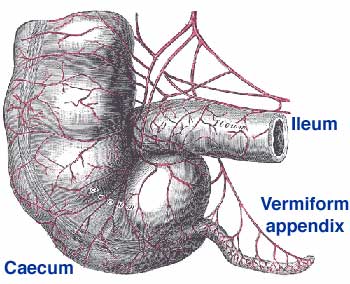
The appendix is a small finger-like projection connected to the cecum. On average the appendix is about 10 cm in length, but can vary from 2 cm-20 cm. It is found in the lower right quadrant of the abdomen, and is corresponds with a point on the surface know as McBurney’s Point. Before now the appendix has been said to be just a vestigial structure, meaning that it has no known purpose.


Recent studies at Duke University Medical Center that there are beneficial bacteria in the appendix that can aid digestion can ride out a bout of diarrhoea that completely evacuates the intestines and afterwards repopulate the gut. The appendix makes a good home for bacteria because they can remain their undisturbed until they are need.

There are immune cells found in the appendix and with this new research has lead researchers to believe that the immune system cells in the appendix are there not to destroy but to protect these potentially important bacteria from harm.

There is a biofilm that is found on the inside of the bowels consists of microbes, mucous and immune system molecules that are able to live together on the lining of the intestine. The Immune molecules are there to protect and nourish the “good” bacteria that are living in these colonies. More importantly these biofilms are the most pronounced in the appendix and become less prevalent as you move away from it. By allowing the "good" bacteria to grow we are preventing "bad" bacteria from growing in their place, thus protecting us from potentially harmful diseases and illnesses.


The function of the appendix might be more visible if it wasn’t for modern health care and sanitation. In diseases that cause severe diarrhoea this can be very beneficial. Due to the position of the appendix it is very difficult for anything to enter it, so when the entire contents of the bowels are removed, including the biofilm, the bacteria are safe from harm. They are now able to emerge from the appendix and repopulate the get before any “bad” bacteria has a chance to take over. However with the advances in modern health care and sanitation practices these “good” bacteria may have very little effect on our health, but in countries where diseases like these are a serious problem because their medical system isn’t a good as ours, this bacteria may be very important.


One possible for the reason of the high occurrence of appendicitis in industrialized societies may be because of what scientists call the “hygiene hypothesis” which states that “people in "hygienic" societies have higher rates of allergy and perhaps autoimmune disease because they -- and hence their immune systems -- have not been as challenged during everyday life by the host of parasites or other disease-causing organisms commonly found in the environment. So when these immune systems are challenged, they can over-react.” This over-reactivity of the immune system could lead to the inflammation of the appendix that has been associated with appendicitis. This could lead to the obstruction of the intestines that causes acute appendicitis, in which case the appendix needs to be removed.


Image From:

Sunday, November 25, 2007

Plaque: a biofilm formation


One of the most uncomplicated things to do besides washing your hands, is brushing your teeth. Saliva in your mouth keeps plaque from forming on your teeth but only for a short time. The enamel on your teeth absorb certain glycoprotein’s that are acidic to form this protective layer called an acquired enamel pellicle. This pellicle has a negative charge which repels most bacteria in the mouth because they are also negatively charged. This defence breaks down with the formation of dental plaque. Some gram positive bacteria such as Streptococcus gordonii, S. oralis, and S. mitis can attach to the pellicle and start colonization. These initial bacteria can coat the pellicle so that other bacteria normally not able to attach, can now attach to these bacteria that initially colonized the teeth. All these cells divide and grow to increase colony strength.

A matrix can now form in between the layers caused by the bacteria and dietary sucrose. Certain bacteria feed off of the dietary sucrose to produce "additional sticky microbial substances", which is where the other bacteria get their energy from. As this matrix of bacteria we call plaque thickens it can become more gram negative from all the other bacteria that is in the plaque. Because of the plaque the there is an absence of oxygen on the surface of the tooth which can lead to the growth of strict anaerobic bacteria, so the plaque can form between teeth. This formation of plaque can start to produce acids from the sucrose, that now cannot be neutralized, because the saliva cannot penetrate the biofilm. The acids can start to demineralise the teeth leading to tooth decay. It can happen fast, within days the biofilm formation can happen if you don’t brush or floss properly. So the thing is people need to brush, floss, and go to the dentist regularly because once this plaque forms only a trip to the dentist can get rid of it.

References:
Prescott, Harley, & Klein's Microbiology Seventh Edition (page 991)